• Avinash Arora
    Avinash Arora
    • Get shareable images
    • Copy Link

    • Share on Facebook
    • Share on X
    • Share on LinkedIn
    • Share on BlueSky
    • Share on Threads
    • Share on Reddit
Avinash Arora logo
    • Change photo
  • Delete photo

Avinash Arora

  • 1 Follower

  • 2 Following

  • The Great Nicobar Project: Striking a Balance Between Development and ConservationThe Great Nicobar Project: Striking a Balance Between Development and Conservation

    The Great Nicobar Project: Striking a Balance Between Development and Conservation

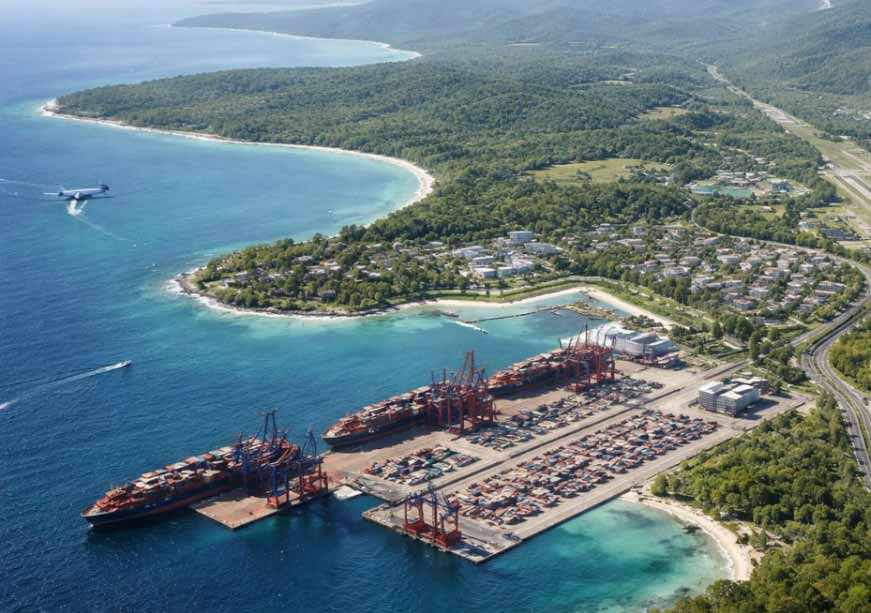
    The Great Nicobar Project has emerged as one of India's most significant infrastructure and strategic development initiatives. Envisioned to enhance connectivity, strengthen maritime capabilities, and support regional economic growth, the project also raises important questions about environmental conservation, biodiversity protection, and sustainable development. As policymakers, environmental experts, and local communities continue to engage in discussions, the focus remains on finding a balanced approach that advances national interests while safeguarding ecological integrity. Understanding the Great Nicobar Project Located at the southernmost tip of the Andaman and Nicobar archipelago, Great Nicobar Island occupies a strategically important position near key international shipping routes in the Indian Ocean. The proposed development includes infrastructure such as a transhipment port, an airport, power facilities, and supporting urban infrastructure intended to improve connectivity and stimulate economic opportunities. The project reflects India's broader vision of strengthening maritime infrastructure, improving logistics, and enhancing regional development. At the same time, its scale has prompted careful examination of potential environmental and social impacts. Why the Project Matters Several factors contribute to the project's strategic importance: • Maritime Connectivity: Improved port infrastructure can support international trade and strengthen India's role in regional shipping networks. • Economic Development: Infrastructure investments have the potential to generate employment, improve logistics, and encourage investment in associated sectors. • Strategic Significance: Given the island's location, enhanced infrastructure may contribute to maritime security and disaster response capabilities. • Regional Growth: Better transportation and public infrastructure can improve access to essential services and support long-term regional development. Environmental and Conservation Considerations Great Nicobar Island is recognized for its rich biodiversity, tropical forests, coastal ecosystems, and unique wildlife. Conservation experts have emphasized the importance of protecting these natural assets while evaluating development proposals. Key environmental considerations include: • Conserving ecologically sensitive forests and coastal habitats. • Protecting native plant and animal species. • Maintaining ecosystem services such as watershed protection and coastal resilience. • Assessing cumulative environmental impacts through rigorous scientific studies. • Ensuring compliance with environmental regulations and monitoring requirements. Sustainable planning requires that environmental assessments continue to inform project implementation throughout its lifecycle. Community and Sustainable Development Infrastructure projects are most successful when they incorporate the perspectives of local stakeholders. Community engagement, transparent decision-making, and inclusive planning can help address social concerns while identifying opportunities for shared development. Important aspects include: • Meaningful consultation with affected communities. • Protection of cultural heritage and traditional livelihoods. • Fair rehabilitation and resettlement measures where applicable. • Investment in healthcare, education, and public services. • Long-term environmental monitoring and adaptive management. Balancing economic aspirations with social and environmental responsibility strengthens the overall sustainability of large-scale development initiatives. Finding the Middle Ground Large infrastructure projects often involve complex trade-offs between economic growth, environmental protection, and social priorities. Rather than viewing development and conservation as competing objectives, many experts advocate integrating sustainability into every stage of project planning and execution. This includes: • Applying science-based environmental assessments. • Adopting resilient and environmentally responsible infrastructure designs. • Strengthening biodiversity conservation measures. • Encouraging collaboration among government agencies, scientists, local communities, and industry. • Continuously monitoring environmental outcomes and adjusting management practices where necessary. Such an integrated approach can help reduce environmental impacts while enabling strategic development objectives to be achieved. Conclusion The Great Nicobar Project illustrates the broader challenge of pursuing infrastructure-led development in environmentally sensitive regions. Its long-term success will depend not only on engineering excellence and economic outcomes but also on responsible environmental stewardship and inclusive governance. By striking a balance between development and conservation, policymakers can work toward a future that supports economic progress while preserving the ecological and cultural value of one of India's most distinctive island ecosystems.

    Avinash Arora
    Avinash Arora
  • BRICS Summit 2025: Expanding Influence, Evolving Priorities, and the Future of BRICS MembersBRICS Summit 2025: Expanding Influence, Evolving Priorities, and the Future of BRICS Members

    BRICS Summit 2025: Expanding Influence, Evolving Priorities, and the Future of BRICS Members

    The BRICS Summit 2025 is expected to mark a defining moment in the evolution of one of the most influential multilateral groupings in the Global South. Comprising Brazil, Russia, India, China, and South Africa, and now expanded to include new members, BRICS has steadily repositioned itself as a platform advocating for a more equitable global order.

    Avinash Arora
    Avinash Arora
  • BRICS Summit 2025: Expanding Influence, Evolving Priorities, and the Future of BRICS MembersBRICS Summit 2025: Expanding Influence, Evolving Priorities, and the Future of BRICS Members

    BRICS Summit 2025: Expanding Influence, Evolving Priorities, and the Future of BRICS Members

    The BRICS Summit 2025 is expected to mark a defining moment in the evolution of one of the most influential multilateral groupings in the Global South.

    Avinash Arora
    Avinash Arora
  • India US Relations: Strategic Partnership and Future CooperationIndia US Relations: Strategic Partnership and Future Cooperation

    India US Relations: Strategic Partnership and Future Cooperation

    India US Relations has gained major attention in global discussions due to its political, economic, and strategic implications. Governments, analysts, and businesses closely follow developments because they influence regional stability, international cooperation, and economic planning.

    Avinash Arora
    Avinash Arora
  • Russia North Korea Relations: History, Strategic Ties, and Global ImpactRussia North Korea Relations: History, Strategic Ties, and Global Impact

    Russia North Korea Relations: History, Strategic Ties, and Global Impact

    Russia North Korea relations have long been a subject of global interest due to their political, military, and strategic significance. Rooted in Cold War alliances, the relationship between Russia and the Democratic People’s Republic of Korea (DPRK) has evolved over decades, shaped by shifting global power dynamics, regional security concerns, and international sanctions. Today, Russia–North Korea relations continue to influence geopolitics in East Asia and beyond, making them an important topic for analysts, policymakers, and observers worldwide.

    Avinash Arora
    Avinash Arora
  • India-UK FTA: Opportunities, Challenges, and Impact in 2025India-UK FTA: Opportunities, Challenges, and Impact in 2025

    India-UK FTA: Opportunities, Challenges, and Impact in 2025

    The proposed India UK FTA is one of the most closely watched trade negotiations in recent years. It aims to boost economic ties between two major democracies with deep historical, cultural, and strategic linkages.

    Avinash Arora
    Avinash Arora
  • India Russia Relations: An Enduring Strategic PartnershipIndia Russia Relations: An Enduring Strategic Partnership

    India Russia Relations: An Enduring Strategic Partnership

    India Russia relation have been one of the most enduring partnerships in modern international politics. Rooted in the Cold War era, when the Soviet Union emerged as India’s closest ally, the relationship has adapted to changing global realities but continues to retain its strategic significance.Defense cooperation remains the backbone of India Russia relation. Russia has supplied India with critical defense platforms, including the S-400 air defense system, Su-30 MKI fighter jets, and nuclear-powered submarines. Joint ventures such as the BrahMos missile project highlight the depth of this cooperation. Despite India’s growing defense ties with the United States and other Western nations, Russia remains a vital partner in India’s defense ecosystem.Energy cooperation is another cornerstone. Russia is a key supplier of oil, gas, and nuclear energy technology. India has invested in Russian energy projects, while Russia supports India’s quest for energy security. This collaboration is crucial as India seeks to diversify its energy sources.Geopolitically, both nations coordinate on several multilateral platforms such as BRICS, SCO, and the G20. However, challenges have emerged in recent years. Russia’s increasing closeness with China and Pakistan has raised concerns in India, while Moscow is wary of New Delhi’s growing proximity to Washington.Despite these shifts, the India-Russia partnership endures because it is built on trust, shared strategic interests, and decades of cooperation. While the relationship may evolve in response to global power shifts, both nations remain committed to preserving this historic bond that continues to shape Eurasian geopolitics.

    Avinash Arora
    Avinash Arora
  • US India Tariffs: Navigating Trade Challenges and OpportunitiesUS India Tariffs: Navigating Trade Challenges and Opportunities

    US India Tariffs: Navigating Trade Challenges and Opportunities

    Tariffs have long been a sticking point in US India Tariffs trade relations. Despite being strategic allies, both nations impose significant duties on each other’s goods, ranging from agricultural products to industrial imports.

    Avinash Arora
    Avinash Arora
  • Shaping the Skies: India’s Air Power and the Future of WarfareShaping the Skies: India’s Air Power and the Future of Warfare

    Shaping the Skies: India’s Air Power and the Future of Warfare

    As the global military landscape undergoes a technological revolution, India is recalibrating its air power strategy to address both conventional threats and emerging domains of conflict. The evolution of warfare now involves not just manned aircraft and traditional dogfights but also drones, hypersonic missiles, and cyber operations.

    Avinash Arora
    Avinash Arora
  • Shaping the Skies: India’s Air Power and the Future of WarfareShaping the Skies: India’s Air Power and the Future of Warfare

    Shaping the Skies: India’s Air Power and the Future of Warfare

    As the global military landscape undergoes a technological revolution, India is recalibrating its air power strategy to address both conventional threats and emerging domains of conflict. The evolution of warfare now involves not just manned aircraft and traditional dogfights but also drones, hypersonic missiles, and cyber operations.

    Avinash Arora
    Avinash Arora
  • China's Sixth Generation Fighter: A Bold Leap in Stealth AviationChina's Sixth Generation Fighter: A Bold Leap in Stealth Aviation

    China's Sixth Generation Fighter: A Bold Leap in Stealth Aviation

    China's announcement of its sixth generation fighter has drawn global attention, signalling a major leap in aerial warfare capabilities. Unlike previous stealth platforms, this new aircraft breaks traditional design norms and introduces elements that place it firmly in the next-generation category. As military powers race to develop 6th gen aircraft, China’s bold unveiling serves both strategic and symbolic purposes—highlighting its ambitions to lead the future of air dominance.

    Avinash Arora
    Avinash Arora
  • Understanding the India Out Campaign in the MaldivesUnderstanding the India Out Campaign in the Maldives

    Understanding the India Out Campaign in the Maldives

    The question of whether the Maldives is part of India has been a subject of debate, especially amid the recent political developments in the island nation. While the Maldives is a sovereign state with its own government and political system, it has always shared close ties with India, both geographically and historically. The India-Maldives relationship has been influenced by various geopolitical factors, particularly in recent years, as the country’s political landscape has shifted. One significant issue that has come to the fore is the India Out campaign, which raises concerns about the growing Indian influence in the region.

    Avinash Arora
    Avinash Arora
  • Azm-e-Istehkam - Pakistan's Attempt to appease Foreign Funding MechanismAzm-e-Istehkam - Pakistan's Attempt to appease Foreign Funding Mechanism

    Azm-e-Istehkam - Pakistan's Attempt to appease Foreign Funding Mechanism

    Pakistan has started a new military operation called Azm-e-Istehkam (Resolve of Durable Stability) to fight Islamist extremism and terrorism. This is the twelfth major operation since 2007, following many smaller ones. Previous operations, like Rah-E-Rast, Rah-E-Haq, and Sherdil, focused on specific areas. Larger operations like Zarb-E-Azb and Radd-Ul-Fassad aimed to destroy terrorist networks across the country. Azm-e-Istehkam aims to stop the rise of Islamist terror networks that have grown stronger after the US left Afghanistan, with some help from Pakistan.

    Avinash Arora
    Avinash Arora