
1 Chapter

Avinash Arora

German Military: Understanding Germany’s Defence Modernisation
The German military is undergoing a broad transformation as Germany seeks to strengthen its defence capabilities and respond to changing security conditions in Europe. The government has increased defence spending, expanded procurement efforts, and introduced reforms aimed at improving the Bundeswehr’s equipment, infrastructure, personnel, and operational readiness.
Avinash Arora

India UK CETA: Strengthening Trade and Economic Cooperation
India UK CETA represents an important step in strengthening economic relations between India and the United Kingdom. The Comprehensive Economic and Trade Agreement focuses on improving market access, reducing trade barriers, expanding cooperation in services, and creating new opportunities for businesses and professionals. The agreement formally entered into force on 15 July 2026, marking a new phase in bilateral economic cooperation.
Avinash Arora
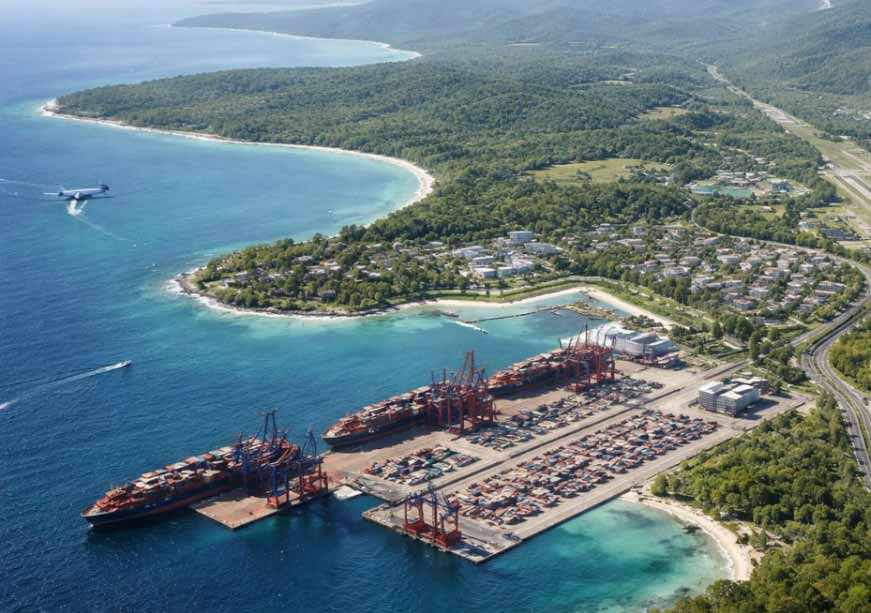
The Great Nicobar Project: Striking a Balance Between Development and Conservation
The Great Nicobar Project has emerged as one of India's most significant infrastructure and strategic development initiatives. Envisioned to enhance connectivity, strengthen maritime capabilities, and support regional economic growth, the project also raises important questions about environmental conservation, biodiversity protection, and sustainable development. As policymakers, environmental experts, and local communities continue to engage in discussions, the focus remains on finding a balanced approach that advances national interests while safeguarding ecological integrity. Understanding the Great Nicobar Project Located at the southernmost tip of the Andaman and Nicobar archipelago, Great Nicobar Island occupies a strategically important position near key international shipping routes in the Indian Ocean. The proposed development includes infrastructure such as a transhipment port, an airport, power facilities, and supporting urban infrastructure intended to improve connectivity and stimulate economic opportunities. The project reflects India's broader vision of strengthening maritime infrastructure, improving logistics, and enhancing regional development. At the same time, its scale has prompted careful examination of potential environmental and social impacts. Why the Project Matters Several factors contribute to the project's strategic importance: • Maritime Connectivity: Improved port infrastructure can support international trade and strengthen India's role in regional shipping networks. • Economic Development: Infrastructure investments have the potential to generate employment, improve logistics, and encourage investment in associated sectors. • Strategic Significance: Given the island's location, enhanced infrastructure may contribute to maritime security and disaster response capabilities. • Regional Growth: Better transportation and public infrastructure can improve access to essential services and support long-term regional development. Environmental and Conservation Considerations Great Nicobar Island is recognized for its rich biodiversity, tropical forests, coastal ecosystems, and unique wildlife. Conservation experts have emphasized the importance of protecting these natural assets while evaluating development proposals. Key environmental considerations include: • Conserving ecologically sensitive forests and coastal habitats. • Protecting native plant and animal species. • Maintaining ecosystem services such as watershed protection and coastal resilience. • Assessing cumulative environmental impacts through rigorous scientific studies. • Ensuring compliance with environmental regulations and monitoring requirements. Sustainable planning requires that environmental assessments continue to inform project implementation throughout its lifecycle. Community and Sustainable Development Infrastructure projects are most successful when they incorporate the perspectives of local stakeholders. Community engagement, transparent decision-making, and inclusive planning can help address social concerns while identifying opportunities for shared development. Important aspects include: • Meaningful consultation with affected communities. • Protection of cultural heritage and traditional livelihoods. • Fair rehabilitation and resettlement measures where applicable. • Investment in healthcare, education, and public services. • Long-term environmental monitoring and adaptive management. Balancing economic aspirations with social and environmental responsibility strengthens the overall sustainability of large-scale development initiatives. Finding the Middle Ground Large infrastructure projects often involve complex trade-offs between economic growth, environmental protection, and social priorities. Rather than viewing development and conservation as competing objectives, many experts advocate integrating sustainability into every stage of project planning and execution. This includes: • Applying science-based environmental assessments. • Adopting resilient and environmentally responsible infrastructure designs. • Strengthening biodiversity conservation measures. • Encouraging collaboration among government agencies, scientists, local communities, and industry. • Continuously monitoring environmental outcomes and adjusting management practices where necessary. Such an integrated approach can help reduce environmental impacts while enabling strategic development objectives to be achieved. Conclusion The Great Nicobar Project illustrates the broader challenge of pursuing infrastructure-led development in environmentally sensitive regions. Its long-term success will depend not only on engineering excellence and economic outcomes but also on responsible environmental stewardship and inclusive governance. By striking a balance between development and conservation, policymakers can work toward a future that supports economic progress while preserving the ecological and cultural value of one of India's most distinctive island ecosystems.
Avinash Arora
BRICS Summit 2025: Expanding Influence, Evolving Priorities, and the Future of BRICS Members
The BRICS Summit 2025 is expected to mark a defining moment in the evolution of one of the most influential multilateral groupings in the Global South. Comprising Brazil, Russia, India, China, and South Africa, and now expanded to include new members, BRICS has steadily repositioned itself as a platform advocating for a more equitable global order.
Avinash Arora
BRICS Summit 2025: Expanding Influence, Evolving Priorities, and the Future of BRICS Members
The BRICS Summit 2025 is expected to mark a defining moment in the evolution of one of the most influential multilateral groupings in the Global South.
Avinash Arora
India US Relations: Strategic Partnership and Future Cooperation
India US Relations has gained major attention in global discussions due to its political, economic, and strategic implications. Governments, analysts, and businesses closely follow developments because they influence regional stability, international cooperation, and economic planning.
Avinash Arora
India-UK FTA: Opportunities, Challenges, and Impact in 2025
The proposed India UK FTA is one of the most closely watched trade negotiations in recent years. It aims to boost economic ties between two major democracies with deep historical, cultural, and strategic linkages.
Avinash Arora
US India Tariffs: Navigating Trade Challenges and Opportunities
Tariffs have long been a sticking point in US India Tariffs trade relations. Despite being strategic allies, both nations impose significant duties on each other’s goods, ranging from agricultural products to industrial imports.
Avinash Arora
Shaping the Skies: India’s Air Power and the Future of Warfare
As the global military landscape undergoes a technological revolution, India is recalibrating its air power strategy to address both conventional threats and emerging domains of conflict. The evolution of warfare now involves not just manned aircraft and traditional dogfights but also drones, hypersonic missiles, and cyber operations.
Avinash Arora
Shaping the Skies: India’s Air Power and the Future of Warfare
As the global military landscape undergoes a technological revolution, India is recalibrating its air power strategy to address both conventional threats and emerging domains of conflict. The evolution of warfare now involves not just manned aircraft and traditional dogfights but also drones, hypersonic missiles, and cyber operations.
Avinash Arora
Write a comment ...